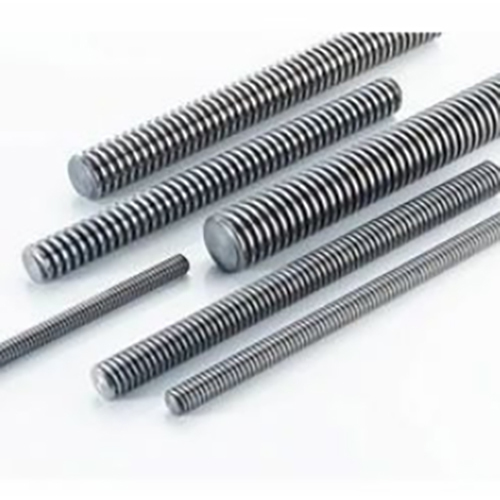
Threaded rods, also known as studs or all-thread, are long fasteners threaded along part or all of their length and primarily designed to be used in tension to join materials like wood, metal, or concrete. They are essential components in a variety of industries, including construction, plumbing, and mechanical engineering.
Types of Threaded Rods
Threaded rods come in several different forms to suit specific application needs:
Fully Threaded Rods: These have threads running the entire length and are ideal for applications requiring maximum adjustability and grip strength, such as general fastening and hanging electrical fixtures.
Partially Threaded Rods/Studs: These have unthreaded "grip length" sections along the middle or a plain shank and are designed for applications where alignment and shear resistance are important, like in motors or pumps.
Tap-End Studs: Threaded on one end for secure anchoring into a tapped hole, with the other end remaining plain.
Double-End Studs: These feature threads on both ends with a plain, unthreaded section in the middle, commonly used for flange connections.
Motion Thread Rods: Specialized types like Acme or high-helix lead screws are designed to convert rotational movement into linear motion in machinery applications, and are significantly more efficient than standard metric threaded rods for dynamic loads.
Materials and Finishes
The selection of material and finish is critical for ensuring the rod's performance in its intended environment:
Steel (Carbon/Mild Steel): The most common and economical option, suitable for general construction and fastening in dry, indoor environments. It is often coated (zinc-plated or galvanized) to provide corrosion resistance.
Stainless Steel (Grades 304, 316): Offers excellent corrosion and chemical resistance, making it ideal for outdoor, marine, or food processing environments where moisture is a concern.
Alloy Steel (e.g., ASTM A193 B7, Grade 8.8): Heat-treated for enhanced strength and durability, these are used in high-stress, high-temperature, or high-pressure applications like oil & gas or machinery assembly.
Brass: Known for good corrosion resistance, conductivity, and a pleasing appearance, brass rods are used in decorative projects and plumbing applications.
Nylon/Plastic: A lightweight, non-corrosive, and electrically insulating option, often used in HVAC and electrical applications where thermal or electrical conductivity needs to be minimized.
Key Specifications
Threaded rods come in various dimensions and strength ratings:
Thread Type: Common types include Metric, UNC (Unified National Coarse), UNF (Unified National Fine), and ACME threads. Coarse threads are generally sturdier and easier to thread, while fine threads allow for precise adjustments.
Diameter and Length: Available in a wide range of metric (e.g., M3 to M64) and imperial sizes, with lengths typically available in standard measures like 1m, 2m, or 3ft, and often customizable for specific project needs.
Strength Grade/Class: Metric rods use a color code system to indicate strength class (e.g., Yellow for 8.8, Red for A4 stainless steel, White for 10.9).






 Send Inquiry
 Get Latest Price

